Did you know that Burning Man started as a simple beach bonfire in San Francisco and now attracts nearly 80,000 people to one of the most inhospitable places on Earth? Welcome to Black Rock City, where billionaire tech bros rub shoulders with radical artists, where survival meets self-expression, and where leaving no trace is both an environmental mandate and a spiritual practice.
80,000 humans create a temporary city based on radical inclusion, gifting, and very expensive RVs
This isn’t your typical music festival – it’s part social experiment, part art installation, and part endurance test wrapped in desert dust and wrapped in more dust. Whether you’re a curious first-timer wondering if you can survive without food trucks and flush toilets, or a seasoned Burner looking to deepen your playa experience, this guide cuts through the mystique to give you the real story of what happens when 80,000 humans create a temporary city based on radical inclusion, gifting, and very expensive RVs.
From Beach Fires to Desert Empire: How Burning Man Became a Thing

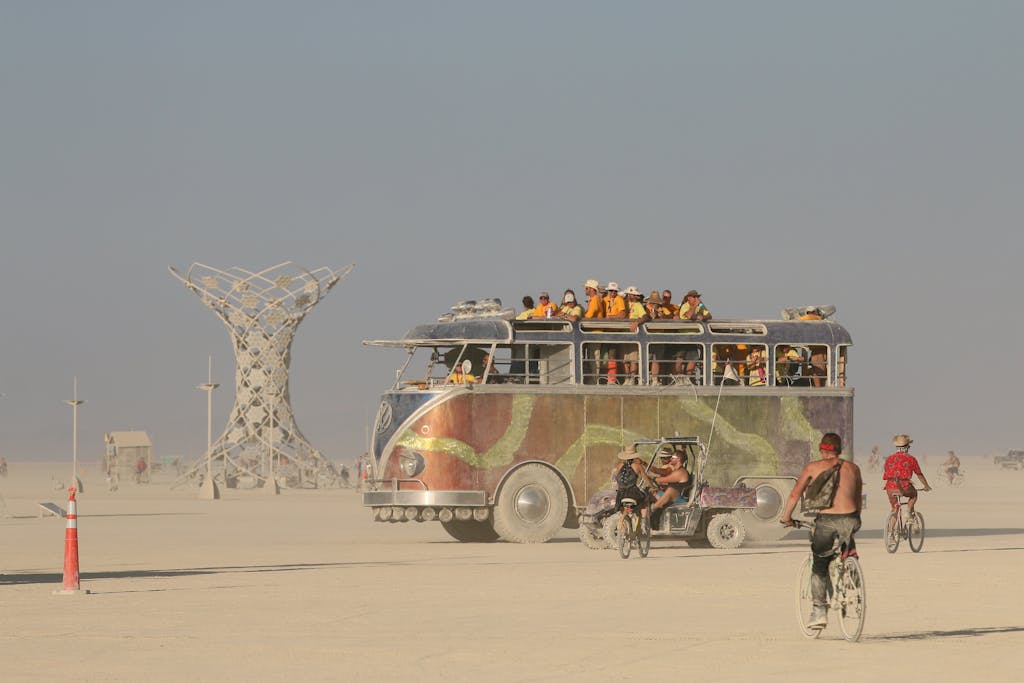
So here’s the wild part – Burning Man literally started because some dude named Larry Harvey got dumped and decided to burn an effigy on a San Francisco beach in 1986. Classic breakup energy, honestly. What began as a small gathering of friends burning an 8-foot wooden man has somehow evolved into this massive cultural phenomenon that costs more than most people’s rent.
The migration to Nevada’s Black Rock Desert in 1990 changed everything. Suddenly you had this vast, empty space where people could build whatever crazy stuff they wanted without neighbors complaining about the noise. The Bureau of Land Management basically said “sure, go nuts” and gave them permits to create temporary cities in the middle of nowhere.
talking about decommodification while dropping $50K on luxury RV setups
But here’s where it gets interesting – and kind of problematic. What started as a genuine counterculture gathering has become this weird mix of radical idealism and Silicon Valley excess. You’ve got people talking about decommodification while dropping $50K on luxury RV setups. The cognitive dissonance is real, and honestly, it’s part of what makes Burning Man so fascinating and frustrating at the same time.
The event has grown from a few hundred beach hippies to nearly 80,000 participants, and with that growth came inevitable changes. The lottery ticket system, the corporate sponsorship debates, the gentrification concerns – it’s all part of this ongoing tension between staying true to the original vision and dealing with the reality of managing a temporary city larger than many actual cities.
The Ten Principles: Philosophy Meets Desert Reality Check
Look, the Ten Principles sound amazing on paper – radical inclusion, gifting, decommodification, radical self-reliance, radical self-expression, communal effort, civic responsibility, leaving no trace, participation, and immediacy. In practice? Well, it’s complicated.
The Ten Principles
Radical Inclusion • Gifting • Decommodification • Radical Self-Reliance
Radical Self-Expression • Communal Effort • Civic Responsibility
Leaving No Trace • Participation • Immediacy
Radical inclusion theoretically means everyone’s welcome, but when tickets cost $575+ and you need thousands more for supplies, transportation, and gear, it’s not exactly accessible to everyone. The gifting economy is beautiful when someone hands you exactly what you need at exactly the right moment, but it can also create weird social pressures and expectations.
Decommodification is probably the most challenging principle to maintain. You’re not supposed to buy or sell anything once you’re there (except ice, coffee, and tickets from the organization), but the amount of money people spend preparing is absolutely insane. Plus, there’s this whole underground economy of services and trades that technically aren’t commercial but… come on.
Radical self-reliance means bringing everything you need to survive in a harsh desert environment. Water, food, shelter, medical supplies – the works. But then you see camps with professional chefs and air-conditioned structures, and you start wondering what “self-reliance” actually means when you have enough money to buy your way out of most problems. The Leave No Trace principle is taken seriously though. The Bureau of Land Management requires the playa to be returned to its natural state, and Burners are generally pretty good about this. MOOP (Matter Out of Place) is a big deal, and people will shame you for dropping a cigarette butt or leaving sequins behind.
Black Rock City: Building Utopia (With Porta-Potties)
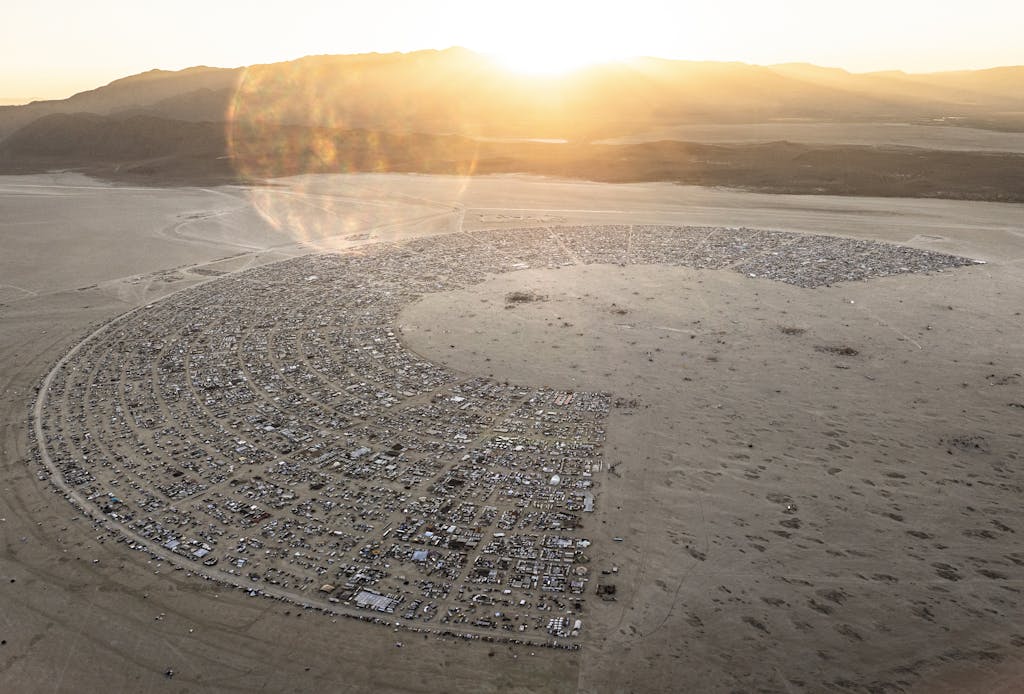
The logistics of Black Rock City are absolutely mind-blowing. Every year, they create what would be Nevada’s third-largest city from scratch, complete with streets, addresses, emergency services, and infrastructure. The layout follows a clock pattern with radial streets and circular avenues, which sounds simple until you’re trying to find your camp at 3 AM in a dust storm.
The Man sits at the center of it all, surrounded by open playa where the big art installations live. Center Camp serves as the community hub with shade, coffee, and usually some kind of performance happening. The Esplanade is like the main strip where the biggest theme camps set up their elaborate structures.
What’s wild is how quickly it all comes together and disappears. Setup (called “build week”) and breakdown (called “strike”) are operations that would make military logisticians weep with joy. Thousands of volunteers work around the clock to create and then completely erase a functioning city.
The infrastructure includes everything from roads to medical facilities to communication networks. There are hospitals, fire departments, and even a small airport. The Black Rock Rangers handle community safety and conflict resolution, while the Department of Public Works manages the actual city infrastructure.
Art installations range from massive sculptural pieces to interactive experiences that can accommodate hundreds of people. These aren’t just pretty things to look at – they’re designed for climbing, exploring, and transformation. The scale is genuinely impressive, with some pieces costing hundreds of thousands of dollars and taking months to design and build.
Desert Survival: What Your Instagram Research Didn’t Tell You
DAY: 100°F+
Blazing desert heat
UV exposure danger
NIGHT: Near Freezing
People in winter coats
Dramatic temperature swing
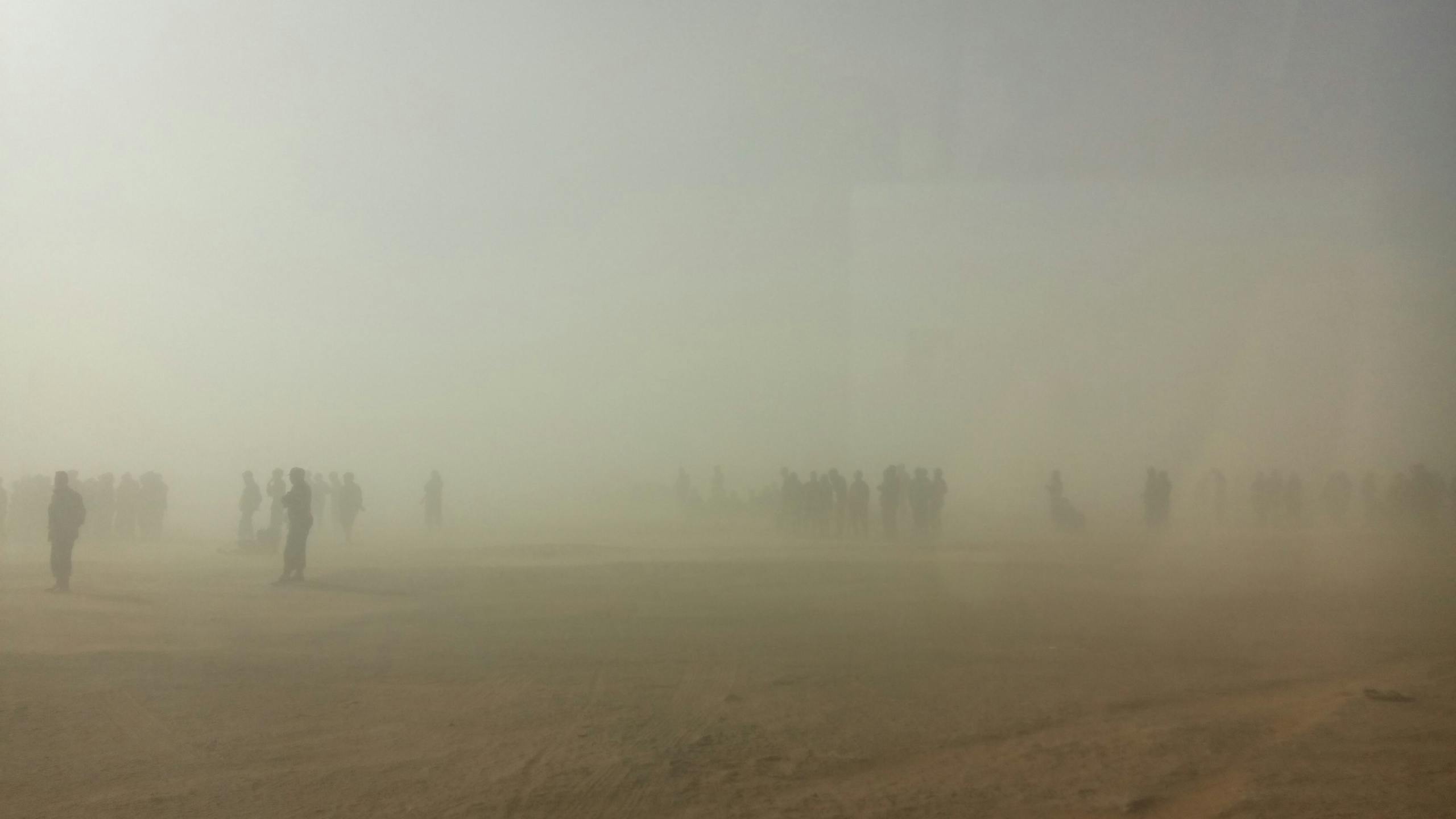
Okay, real talk – the Black Rock Desert will try to kill you in multiple creative ways. The alkaline dust gets into everything and can cause chemical burns. Temperatures swing from over 100°F during the day to near freezing at night. Dust storms can reduce visibility to zero and last for hours.
Daily Water Needs
Drinking: 1.5 gallons per person
Cooking/Cleaning: 0.5+ gallons
TOTAL: 2+ gallons per day minimum
Water is life out there. You need at least 1.5 gallons per person per day, and that’s just for drinking. Add in cooking, cleaning, and the occasional rinse-off, and you’re looking at 2+ gallons daily. Bring way more than you think you need because dehydration sneaks up fast in that environment.
Food planning is crucial since there’s literally nowhere to buy anything. Canned and dried foods work best because refrigeration is challenging without a generator. Many people rely on camp stoves, but propane can be tricky in extreme heat. Ice is available for purchase, but it goes fast.
Shelter needs to handle dust, heat, wind, and potential rain. Regular camping tents don’t cut it – you need something designed for extreme conditions or a serious upgrade with additional stakes and guy-lines. Many people go with hexayurts, shade structures, or RVs if they can afford it.
The dust situation cannot be overstated. It’s not just sand – it’s superfine alkaline powder that infiltrates everything. Your electronics will die without protection. Your skin will crack without constant moisturizing. Your lungs will hate you without a good dust mask. Goggles are essential, not optional.
Bikes are the primary transportation, but they need serious protection from the dust. Many people wrap their chains in duct tape and resign themselves to basically replacing everything afterward. Having backup parts is smart because bike repair shops charge premium prices in the default world.
Art That Actually Matters (Beyond the ‘Gram)
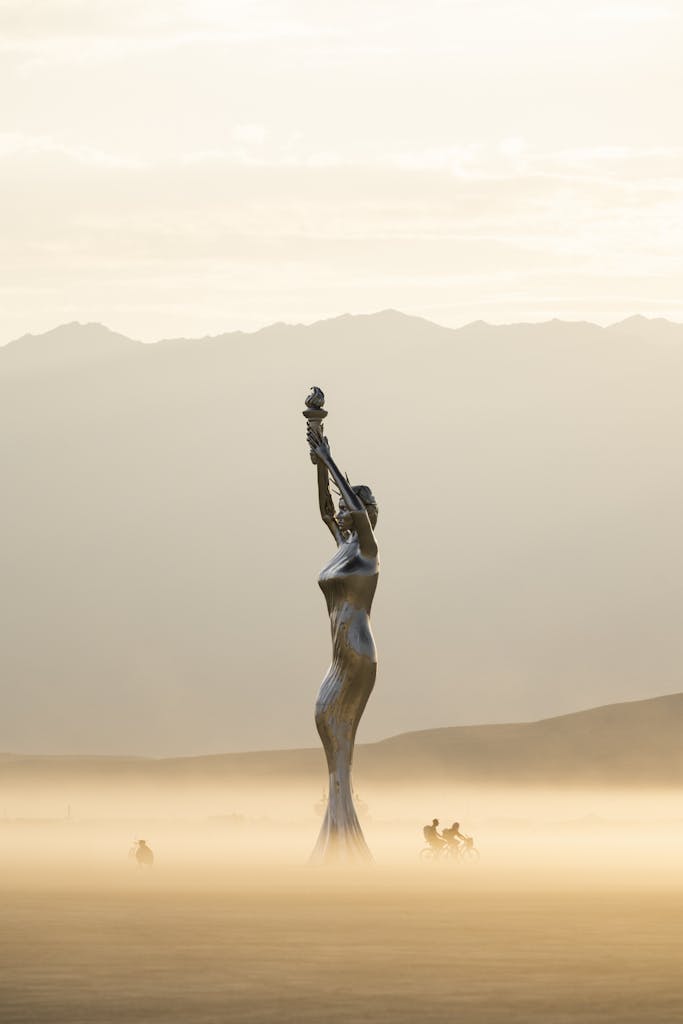
The art at Burning Man isn’t there to be consumed passively – it’s designed for interaction, transformation, and often destruction. These aren’t museum pieces behind velvet ropes. They’re jungle gyms for adults, spaces for reflection, and sometimes literal playgrounds.
Large-scale installations often cost more than most people’s houses and represent months or years of planning. Artists apply for grants through Burning Man’s arts program, but most funding comes from personal investment or crowdfunding. The commitment level is honestly insane when you consider these pieces exist for one week and then either burn or get disassembled.
The Temple is probably the most emotionally intense part of the whole experience. Built specifically to be burned on the final night, it serves as a place for people to process grief, loss, and transition. People leave photos, letters, and personal items that all go up in flames during the Temple Burn. It’s heavy, cathartic, and unlike anything else.
Fire art is huge because, well, fire is awesome and also symbolic of transformation. From flamethrowers to fire dancers to spinning installations, the relationship with fire is both celebratory and ritualistic. Safety protocols are strict though – the Black Rock Desert Fire Department doesn’t mess around.
Mutant vehicles (art cars) are moving art pieces that also serve as transportation and mobile dance parties. Getting licensed to drive one requires passing safety inspections and proving you can navigate without running over pedestrians. Some of these vehicles are genuinely impressive engineering feats disguised as dragons or spaceships.
Sound camps create the 24/7 music culture that defines the nighttime playa experience. These aren’t just DJs with speakers – they’re sophisticated sound systems with professional-grade equipment creating immersive audio environments. The music runs continuously, and finding your tribe often means finding the right sonic landscape.
Finding Yourself While Losing Your Mind
Radical self-expression at Burning Man goes way beyond weird costumes (though the costumes are pretty spectacular). It’s about permission to be whoever you want to be, freed from the social expectations and professional personas that usually define us.

The anonymity factor is huge. You can introduce yourself as anyone, try on different aspects of your personality, and generally experiment with identity in ways that feel impossible in regular life. Playa names are common – temporary identities that people adopt for the duration of the event.
Costume culture serves practical and expressive purposes. The extreme environment requires serious sun protection and dust management, so why not make it fabulous? Plus, regular clothes mark you as a “sparkle pony” (someone unprepared for the conditions), while creative outfits show you understand the assignment.
“Sparkle Pony”
Regular clothes
Unprepared for conditions
Veteran Burner
Creative, protective outfit
Understands the assignment
Performance art happens everywhere, from organized stages to spontaneous street theater. The line between performer and audience dissolves completely. You might find yourself in an impromptu drum circle, philosophical debate, or interpretive dance session without quite knowing how you got there.
The psychological intensity can be overwhelming. Sensory overload, sleep deprivation, and the sheer strangeness of the environment can push people way outside their comfort zones. Some folks have profound breakthrough moments. Others just want to go home and shower.
Social dynamics get weird fast. The combination of extreme conditions, altered states, and suspended social norms creates this hothouse environment for intense connections. People form deep bonds quickly, but they don’t always translate back to the default world.
The Burn: When Everything Goes Up in Flames
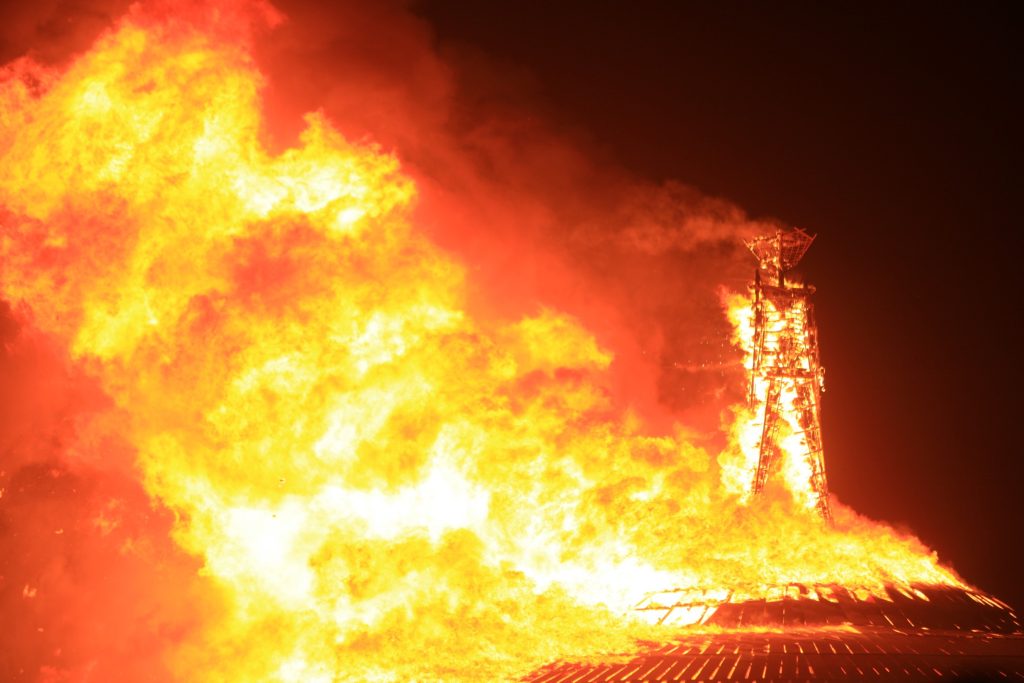
Saturday night’s Man Burn is the climactic event everyone’s been building toward. It’s part ritual, part party, part controlled chaos. Tens of thousands of people gather in concentric circles around the effigy as fire dancers and performers create this massive ceremonial spectacle.
The energy is electric and kind of primal. When the Man finally goes up in flames, the crowd erupts into this collective cathartic release that’s hard to describe if you haven’t experienced it. People run toward the fire (until rangers stop them), drums start beating everywhere, and suddenly you’re part of this ancient human ritual disguised as a festival.
Sunday’s Temple Burn is the emotional opposite – quiet, contemplative, and often devastating. This is where people process grief, loss, and major life transitions. The silence as the temple burns is profound, broken only by occasional sobs or the crackling of flames. It’s heavy stuff.
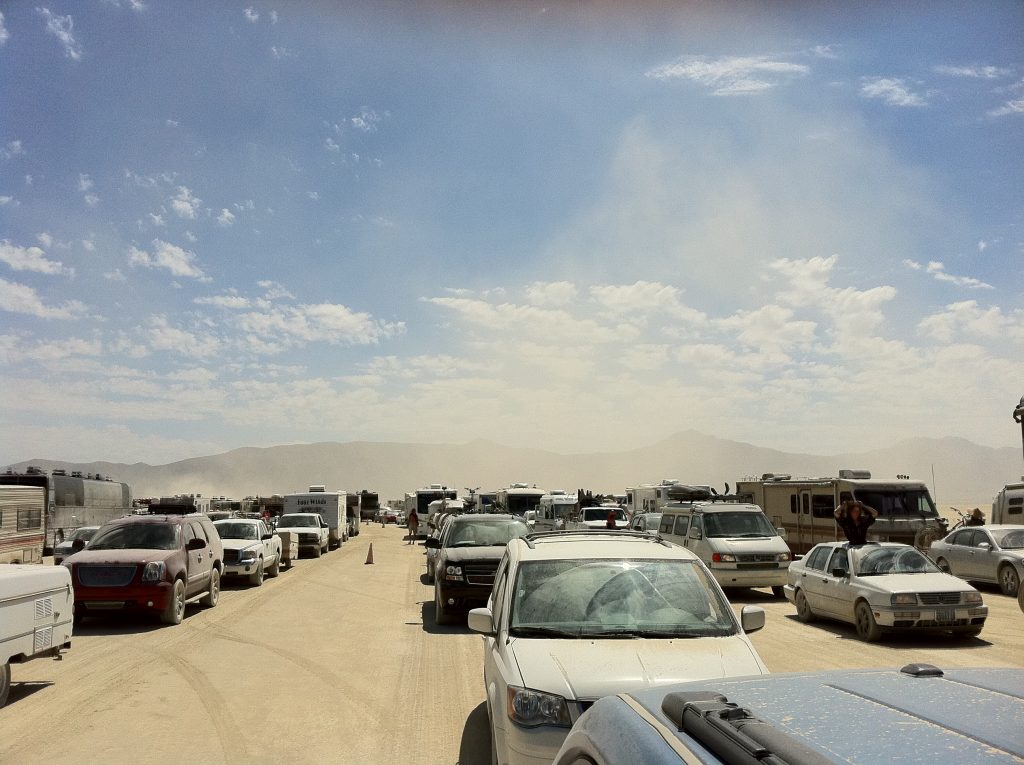
Exodus is its own special kind of hell. Imagine 80,000 people trying to leave the desert at roughly the same time on a two-lane highway. Wait times can stretch 8+ hours, and that’s if you time it right. Many people plan their departure for Tuesday or Wednesday to avoid the worst traffic.
The post-burn emotional crash is real. You’ve spent a week in this intense, beautiful, overwhelming environment, formed deep connections with strangers, and challenged yourself in ways you never expected. Then suddenly you’re back in the world of traffic lights and small talk, and everything feels muted and weird.
Integration – figuring out how to bring Burning Man principles back to regular life – is the real challenge. How do you maintain that sense of radical inclusion when you’re back in your cubicle? How do you keep gifting without expectation when capitalism demands everything has a price? Some people nail it, others spend the year counting down until they can return to the playa.
Conclusion
Burning Man isn’t just a festival – it’s a temporary society that challenges everything we think we know about community, commerce, and human connection. Yes, it’s become more expensive and yes, there are now luxury camps that somewhat defeat the radical self-reliance purpose. But strip away the Silicon Valley gentrification and Instagram posturing, and you’ll find something genuinely transformative: a place where strangers become family, where art serves purpose beyond profit, and where the simple act of gifting without expectation can restore your faith in humanity.
You’re not going to a show, you’re helping create one. Pack accordingly.
The desert doesn’t care about your day job, your follower count, or your carefully curated life – it demands authenticity, vulnerability, and presence. Whether you leave Black Rock City dusty, exhausted, and forever changed, or whether you decide it’s an overpriced hippie experiment, depends entirely on what you bring to the playa. Just remember: you’re not going to a show, you’re helping create one. Pack accordingly, bring way more water than you think you need, and prepare to have your assumptions about human nature completely rearranged.